|
Sustainable Food
|
|
CAP2020 - Debating the future of CAP Farm Miinisters agree CAP Health Check Reform Nov '08 - Bidwells Summary Role of Sustainability in CAP - F. Fischler UK to oppose capping CAP subsidies Debate on CAP Health Check May '08 Rural Development Fund increased, but Environmental Stewardship lost (from Jan 07) Implementation of CAP in 27 states, (goes to UK) EFFAT 'Berlin Declaration' on CAP - from EU agricultural trade unions Points for discussion 1. Would the proposals here stop the attacks that EU subsidising our food - especially if export subsidies stopped? Could this unlock Doha round? 2. Would it attract WTO challenge as a 'barrier to trade'? Cross Compliance hasn't so far 3. What are the implications for producers outside the EU? Drag n Drop - A recent Commission Poll for EU citizens said the priorities of CAP should be to: * provide healthy and safe food |
From Common Agricultural Policy (CAP Budget = £39Bn) To Sustainable Food Policy..EU wide Consultation for CAP post 2013 invites all EU citzens and organisations to take part in the debate. "The Common Agricultural Policy is for all of society. It is your policy, not just for farmers. European agriculture is about food security, but also about landscapes, employment, environment, climate change."PAST The two big world trading blocks that control world food trade and agriculture are US and EU - the former a loud exponent of free trade capitalism, and the latter an emerging model of social capital. While the Doha round is stuck over the failure to reduce their subsidies, commentatoors tend to blame EU & US equally. Yet each approach the main problem of food production - that of overproduction, in different ways. The US invests in its agriculture, depending on aggresive exports to get rid of their surplus. eg Right-wing Republicans are lobbying Bush at the moment to remove the embargo on trade with Cuba - so they can get rid of their present surplus to Cuba, who pay cash. The US likes to see itself as "feeding the world"
PRESENT
Farmers need to comply with complex "Cross Compliance" rules to get all their subsidies. These rules are linked to Statutory Management Requirements SMRs with penalties relating with the amount of subsidy received. These rules came in as the 'Fischler reforms' and require farmers to improve environmental conservation measures, and ensure decent animal welfare - not much above UK legal requirements. There seems to be a general acceptance of this subsidy system. Markets round the world have yet not collapsed as a result and there has not been a challenge re "barrier to trade". FUTURE Now is the time to start making proposals as there is a "Health Check" checking how the new subsidy system is working (HealthCheck Blog). Why not make the SMRs (simpler) and more sustainable with 50% funding for looking after the land and 50% for promoting more sustainable measures. The SMRs could drive more susbstantial - and more SUSTAINABLE requirements, that conform to the overall aims of sustainable deveelopment - more environmentally, socially and economically balanced. Instead of paying for just "good agricultural practice", it could be used to drive what we need our food and farming practice to look like in the future. The Single Payment (Pillar 1) could be reduced to half - over a number of years. There could be a transfer of 10% per year from SPS to Pillar 2 funding - ie 'more sustainable' X-Compliance. Subsidies could be allocated to promote more sustainable food & farming - healthier for people and the planet. Simple as that! 1. 10% linked with reducing carbon dioxide emissions. This would be a good starter as agriculture is NOT in Emissions Trading Scheme, yet is a major contributor to GHGs. So as a sector, it could help meet the EU targets of 2.5% reduction/per. Set an SMR = a 2.5% reduction - either by less emissions or greater sequestration (carbon in soil!!). This could "feed into" checklists/audits etc, which retailers developing. 2. 10% could be for demonstrating healthier food. There would be debate about the link between production & healthy consumption? While there would be much debate, it is clear more local vegetables would be good all round, yet there is little subsidy to them at present. There is a new Common Market Organisation for fruit and vegetables. Yet lots of subsidies to meat/dairy which not good for planet. One suggestion we received - use the famous food "pyramid" 3. 10% for social concerns. Farms are still most dangerous workplace in Britain, and I bet that applies across Europe. While migrant labour is used more and more throughout EU, better protection should be built in - eg do all EU countries have the equivalent of the Gangmasters Licensing Act? This could encompass "Fairtrade for EU" and "Ethical Trade Initiative" standards/requirements as SMRs. 4. 10% for better animal welfare. Go beyond present SMRs to take in free range & organic standards. 5. 10 % to do more for biodiversity. Could use BAP species as starting point. Farmers could demonstrate x% improvement in selected range of these species.
This form of of control has the advantage that it is not regulatory - nobody HAS to do it. The control schemes would be run along similar lines that have been developed for quality systems (eg ISO 14001) and including Assurance Schemes & LEAF that retailers are driving. It is interesting that ISO 14001 is NOT considered a barrier to trade by WTO! These systems could easily be developed to conform to the each 10% SMRs. Examples of Systems, Standards & Sustainability. This Policy fits the more social form of capital of te EU. Instead of consumers driving the process in a curious fashion at checkouts, there would be a social construct guaranteeing certain environmental, health and social conditions. The original CAP was driven by Food Security (Policy) while this would be driven by Food Sustainability Policy. This should direct food production - to 21st century standards. It would also mean we didn't have to have loads of labels and confusing messages, which is the only route to consumers. By investing in producers who have to demonstrate conformance, it makes it easir for consumers. Can it be this simple? |

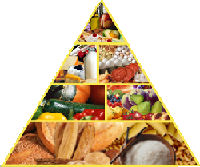 to drive what needs to be grown.